A beautiful kitchen is important-but a kitchen that’s easy to live with every day is even better. Thoughtful storage and durable finishes can reduce the small frustrations that build up over time, which is why custom kitchen cabinetry deserves consideration alongside countertop and layout decisions.
A well-planned kitchen design goes beyond aesthetics. It considers how the space will be used daily—how often surfaces are cleaned, how easily cabinets can be accessed, and how efficiently the layout supports cooking and movement.
This guide explores how to design a low-maintenance kitchen by choosing the right materials, optimizing layout, and selecting finishes that simplify daily use without sacrificing style.
What Makes a Kitchen Truly Low Maintenance?
A low-maintenance kitchen isn’t defined by a single material or feature. It’s the result of thoughtful decisions across the entire space—from kitchen cabinets to layout planning and surface selection.
Daily Use vs Occasional Use Design
Kitchens designed for real, everyday use require different considerations than show kitchens. Spills, cooking mess, foot traffic, and frequent cleaning all place demands on materials and layout.
A low-maintenance approach focuses on:
- Easy-to-clean surfaces
- Durable materials
- Efficient workflow
- Reduced clutter zones
Choosing Materials That Are Easy to Clean and Maintain
Material selection plays a major role in how much effort your kitchen requires to maintain over time.
Low Maintenance Countertop Options
Countertops are one of the most heavily used surfaces in any kitchen.
- Quartz countertops are a popular low-maintenance choice due to their non-porous surface, which resists stains and does not require sealing.
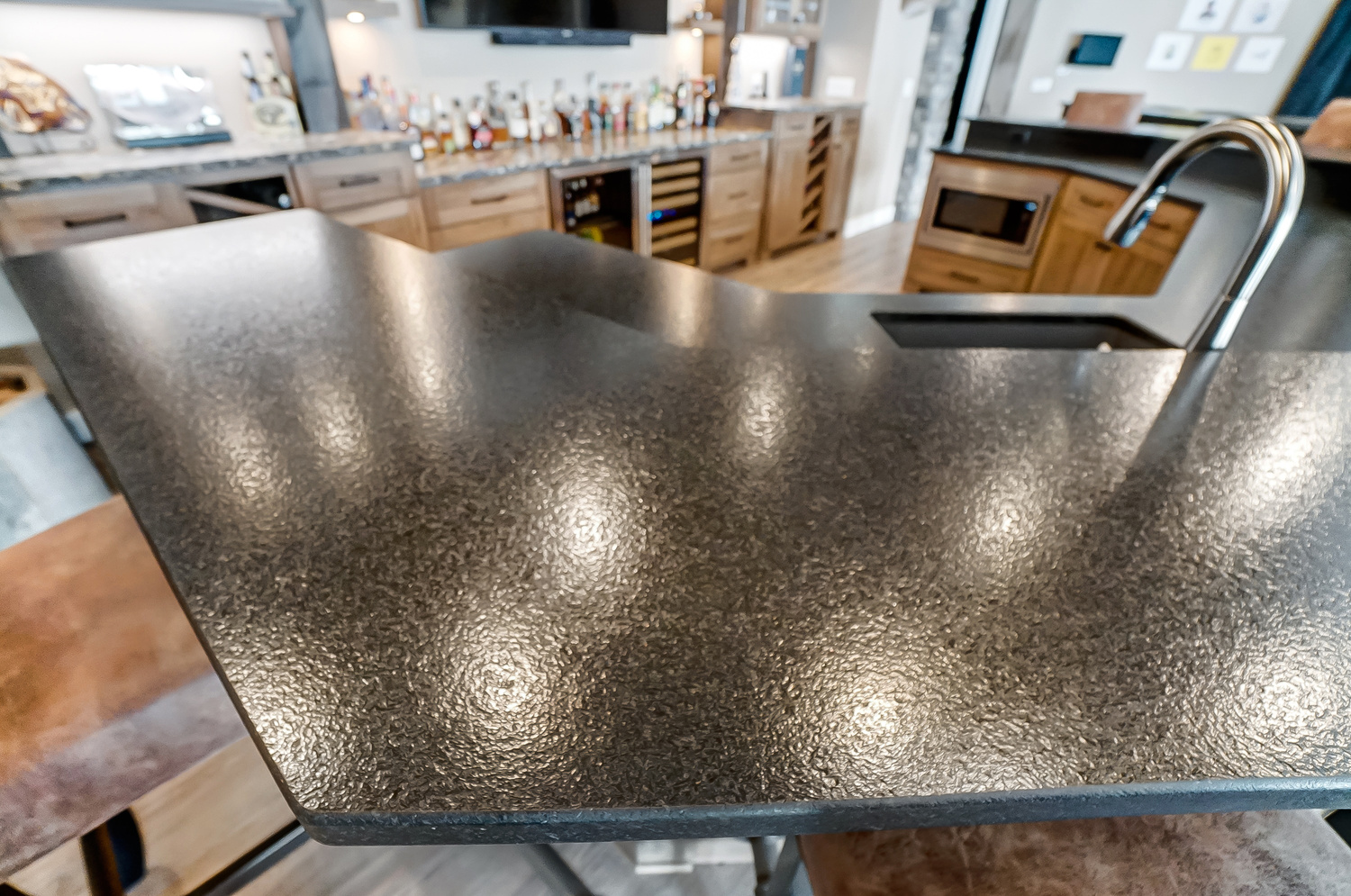
- Granite is also durable but may require periodic sealing depending on the type.
When planning your kitchen countertops and surfaces, it’s important to consider not just appearance but how they perform under daily use. You can explore more options on our kitchen countertops and surfaces page.
Cabinet Finishes That Resist Wear and Stains
Cabinet finishes significantly impact how often cleaning is needed.
- Smooth finishes are easier to wipe clean than heavily textured surfaces
- Matte finishes tend to hide fingerprints better than high-gloss options
- Durable coatings help prevent staining and wear over time
Choosing the right kitchen cabinets and finish options ensures your cabinets maintain their appearance with minimal upkeep.
Smart Kitchen Layouts That Reduce Cleaning and Effort
Layout decisions directly influence how easy your kitchen is to maintain.
Efficient Work Zones and Traffic Flow
A well-organized layout reduces unnecessary movement and keeps messes contained. Grouping key areas—prep, cooking, and cleaning—helps streamline daily tasks.
Efficient kitchen design minimizes cross-traffic, preventing spills and clutter from spreading throughout the space.
Minimizing Clutter Through Layout Planning
Clutter often results from poor layout planning rather than lack of storage.
- Place frequently used items within easy reach
- Avoid overcrowding countertops
- Ensure appliances don’t disrupt workflow
A thoughtful layout reduces the need for constant cleanup.
Designing Kitchen Cabinets for Everyday Practicality
Cabinet design has a major impact on both usability and maintenance.
Drawer-Based Storage vs Deep Cabinets
Drawers offer better visibility and accessibility compared to deep cabinets. This reduces the need to dig through items, keeping spaces more organized and easier to maintain.
Hardware, Handles, and Easy-Clean Designs
Cabinet hardware can either simplify or complicate cleaning.
- Simple, streamlined handles are easier to wipe down
- Avoid intricate designs that collect dust and grease
- Flat-panel cabinet styles are typically easier to maintain
As discussed in our guide on framed vs frameless cabinets and how they affect usability, cabinet structure also plays a role in accessibility and ease of use.
Finishes and Details That Make a Big Difference Over Time
Small design details can have a significant impact on long-term maintenance.
Seamless Surfaces and Simple Edge Profiles
Fewer seams mean fewer places for dirt and debris to accumulate.
- Simple edge profiles are easier to clean
- Continuous surfaces reduce maintenance effort
This is especially important for kitchen countertops, where daily use is highest.
Backsplashes and Wall Protection
Backsplashes protect walls from spills and splatter—but some options are easier to maintain than others.
- Full-height backsplashes reduce exposed wall space
- Larger tiles or slab backsplashes minimize grout lines
- Fewer joints mean less cleaning over time
Balancing Style with Low-Maintenance Living
A low-maintenance kitchen doesn’t have to feel basic or utilitarian. In fact, many modern design trends naturally align with easy-care principles.
Clean lines, simple materials, and minimal detailing all contribute to both aesthetics and practicality. By focusing on function first, homeowners often end up with a space that looks better and performs better.
What Features Make a Kitchen Low Maintenance?
A low-maintenance kitchen typically includes:
- Non-porous, easy-to-clean countertops
- Durable cabinet finishes that resist stains
- Efficient layout with defined work zones
- Minimal seams and simple edge profiles
- Smart storage that reduces clutter
These features work together to create a kitchen that requires less effort to clean and maintain over time.
Final Thoughts on Designing a Low-Maintenance Kitchen
Designing a kitchen that’s easy to maintain starts with making practical decisions early in the process. Materials, layout, and cabinetry all play a role in how the space functions day to day.
A thoughtful kitchen design prioritizes usability alongside aesthetics, while well-chosen kitchen cabinets and surfaces reduce the time and effort needed for cleaning and upkeep.
By focusing on simplicity, durability, and smart planning, homeowners can create a kitchen that not only looks great—but continues to work effortlessly for years to come.