When planning a kitchen remodel, most homeowners focus on countertop material, color, or finish. But two details that often get overlooked—countertop thickness and edge profiles—can dramatically influence how a kitchen looks, feels, and functions. Those details are especially important when developing kitchen design plans that balance proportion and usability.
These design choices affect everything from visual balance and durability to cleaning ease and long-term satisfaction. Whether you’re designing a modern kitchen or updating a more traditional space, understanding how thickness and edge profiles work together can help you make smarter, more confident decisions about your kitchen countertops.
Why Countertop Thickness Matters in Kitchen Design
Visual Proportion and Balance
Countertop thickness plays a major role in how your kitchen feels visually. Thicker countertops create a bold, substantial look, while thinner profiles emphasize clean lines and simplicity.
In open-concept layouts and modern kitchen design, thinner or mitered-edge countertops often help spaces feel lighter and more refined. In contrast, traditional kitchens with detailed cabinetry often benefit from the added visual weight of thicker countertops.
According to the 2024 Houzz Kitchen Trends Study, over 65% of homeowners say visual style and proportion heavily influence their countertop decisions, not just material alone.
Durability and Structural Performance
Beyond aesthetics, thickness also affects performance. Thicker countertops:
- Provide stronger support for overhangs and seating
- Reduce visible seams on large surfaces
- Enhance durability in high-use areas like islands
This becomes especially important in kitchens with large islands or extended breakfast bars, where structural integrity matters just as much as design. Independent testing from Consumer Reports’ countertop buying guide highlights how construction details—including thickness and edge design—play a role in long-term durability and user satisfaction.
Common Countertop Thickness Options Explained
Standard Thickness Countertops
Standard countertop thickness (typically around 2–3 cm) remains popular due to its versatility. It works well with most cabinet styles and keeps fabrication costs predictable.
This option is often chosen for:
- Smaller kitchens
- Budget-conscious remodels
- Clean, understated designs
Thick and Laminated Edge Countertops
Thicker-looking countertops are often created using laminated or mitered edges rather than solid slabs. This technique delivers a bold appearance without excessive material weight.
These styles are especially popular for:
- Statement kitchen islands
- Waterfall edge designs
- High-end modern kitchen countertops
A Consumer Reports kitchen remodeling survey found that nearly 40% of upscale kitchen remodels now feature thicker or mitered-edge countertops for visual impact.
How Edge Profiles Influence Kitchen Style
Edge profiles might seem like a minor detail, but they significantly affect both style and usability.
Clean Edge Profiles for a Modern Kitchen
Simple edge profiles are a hallmark of contemporary design.
Common choices include:
- Eased edges
- Square edges
- Slight chamfers
These profiles pair perfectly with flat-panel cabinets and minimalist hardware, reinforcing the streamlined look expected in a modern kitchen.
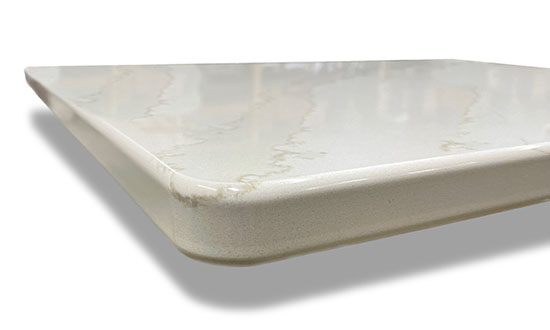
Decorative Edge Profiles for Traditional Kitchens
More ornate edges introduce softness and detail.
Popular decorative profiles:
- Bullnose
- Beveled edges
- Ogee edges
These styles complement raised-panel cabinetry and classic kitchen designs, adding character and craftsmanship to the space.
For homeowners still deciding how cabinets and countertops should work together, this article on how to coordinate countertops and cabinets like a designer offers helpful guidance.
Matching Thickness and Edge Profiles to Kitchen Style
Thickness and Edges in a Modern Kitchen
Modern kitchens typically favor:
- Thinner or visually slim countertops
- Straight, minimal edges
- Consistent surfaces across islands and perimeter counters
This approach emphasizes simplicity and architectural clarity, especially in open layouts.
Transitional and Traditional Kitchens
Transitional kitchens often strike a balance, using subtle edge details with moderate thickness. Traditional kitchens tend to embrace thicker profiles and more decorative edges for a grounded, timeless feel.
The key is consistency—mixing overly modern edges with traditional cabinetry can feel visually disjointed.
Kitchen Islands: Where Thickness and Edges Matter Most
Kitchen islands are often the focal point of the room, making thickness and edge choices even more impactful.
Thicker countertops:
- Anchor large islands visually
- Support seating overhangs
- Create a high-end, custom feel
Waterfall islands, in particular, rely on carefully planned thickness and clean edges to achieve their dramatic look.

According to Houzz, over 70% of renovated kitchens now include an island, making countertop detailing a key design decision rather than an afterthought.
Practical Considerations Homeowners Often Overlook
Cleaning and Everyday Use
Edge profiles affect maintenance more than many people expect. Rounded edges are easier to wipe clean, while sharp corners may collect debris or show wear faster in high-traffic kitchens.
Budget and Fabrication Complexity
Thicker edges and decorative profiles often require more fabrication time and precision. While they can elevate the look of your kitchen, simpler profiles can still feel premium when paired with quality materials and thoughtful design.
For homeowners planning a remodel, this post on top things to consider when remodeling your kitchen helps align design choices with real-world constraints.
How Thickness and Edge Profiles Impact Long-Term Satisfaction
Design decisions that seem small today can influence how you feel about your kitchen years down the line. Research from the National Kitchen & Bath Association (NKBA) shows that over 80% of homeowners prioritize long-term durability and ease of use over short-lived trends when evaluating kitchen upgrades.
Choosing the right countertop thickness and edge profile helps ensure your kitchen countertops remain functional, attractive, and enjoyable for years to come.

Final Thoughts on Countertop Thickness and Kitchen Design
Countertop thickness and edge profiles play a far greater role in kitchen design than most homeowners realize. These details shape visual balance, usability, and durability—especially in a modern kitchen, where clean lines and proportion matter.
By understanding how these elements work together, you can make more informed choices that align with your lifestyle, design goals, and long-term expectations. Thoughtful planning now leads to a kitchen that not only looks great but performs beautifully every day.