Your bathroom countertop deals with a different kind of daily wear than almost any other surface in your home. Toothpaste splatters, makeup, hairspray, and skincare products with active acids all land on that same few square feet, morning and night, alongside near-constant moisture. Choosing the best countertop for bathroom vanity use isn’t just about matching your tile — it’s about picking a material that can handle that specific mix of exposure without losing its finish, staining, or turning into a maintenance chore.
Here’s how to think through the decision, material by material.
What to Weigh Before You Choose a Bathroom Vanity Countertop
Before comparing stones, it helps to get clear on four things:
- Moisture exposure. A powder room sees far less water than a shared family bathroom with two kids brushing their teeth every morning.
- Sealing tolerance. Natural stone generally needs periodic sealing to stay stain-resistant. If keeping up with that isn’t appealing, it should steer your choice.
- Budget. Slab pricing varies by material, thickness, and edge profile. As a general rule, engineered quartz and standard granite tend to land in a similar price range for a vanity-sized top, while natural quartzite and more exotic marble slabs typically run higher due to sourcing and fabrication. Soapstone often falls in the middle, depending on the specific quarry and slab.
- Look and feel. Do you want the one-of-a-kind veining of natural stone, or the more consistent, engineered look of quartz?
Keep these four in mind as you go through the options below — they matter more than any single “best” material on paper.
The Best Countertop for Bathroom Vanity: Five Materials Compared
Quartz
Quartz is engineered from crushed natural quartz crystal bound with resin, which makes it non-porous — it won’t absorb moisture, and it never needs sealing. For a bathroom that gets heavy daily use, that’s a real advantage: no yearly maintenance, and strong resistance to stains from cosmetics and skincare products. The trade-off is a slightly more uniform, manufactured look compared to natural stone, though modern quartz does a convincing job mimicking marble veining if that’s the aesthetic you’re after.
Granite
Granite brings natural variation that no two slabs share, along with strong resistance to scratching and everyday wear. It is porous, though, so it needs periodic sealing — typically every one to two years — to stay stain-resistant. According to guidance published by the Natural Stone Institute, most natural stone surfaces should be sealed on a regular schedule and cleaned only with pH-neutral cleaners to avoid breaking down the sealer prematurely. For homeowners who don’t mind that light upkeep in exchange for a completely unique slab, granite remains one of the most dependable natural stone options for a busy bathroom.
Marble
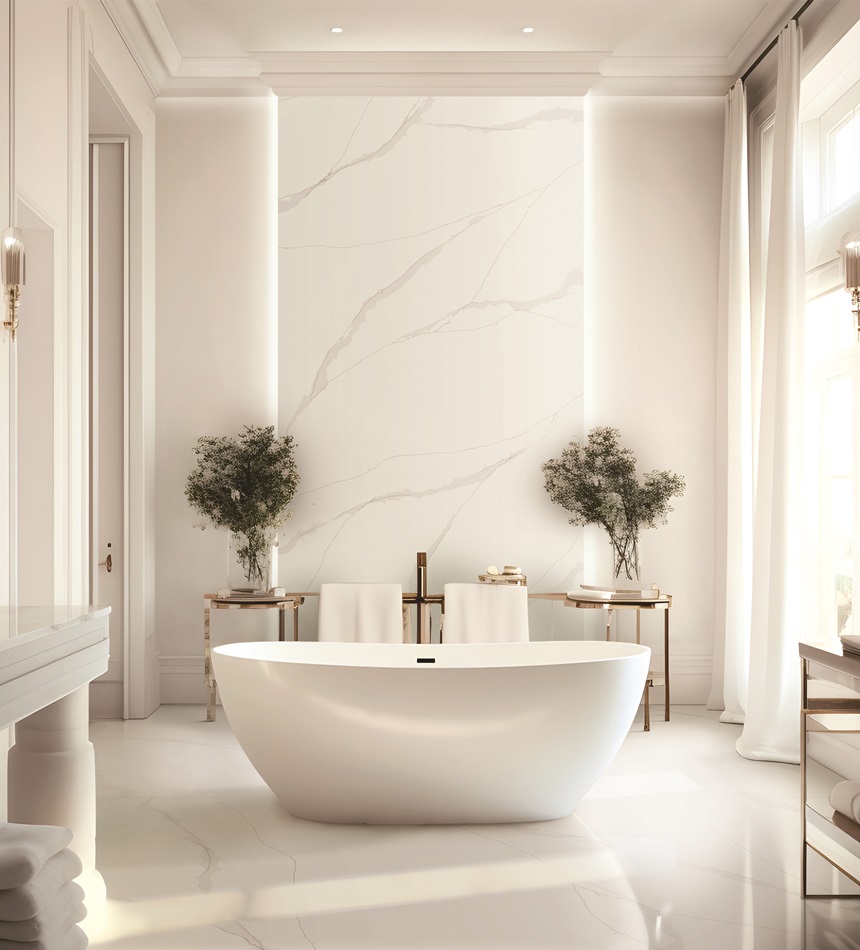
Marble is the classic choice for a reason — nothing else has quite the same soft, elegant veining, and it’s often the material people picture first when they think of a luxury bathroom. It’s also the most reactive material on this list: acidic products like some skincare treatments and toothpaste can etch the surface if left sitting, leaving a dull mark rather than a stain. Marble tends to work best in lower-traffic settings, like a powder room or a primary suite bath where products are wiped up quickly rather than left to sit.
Quartzite
Often confused with quartz because of the name, quartzite is actually a natural stone — formed when sandstone is compressed under intense heat and pressure. The result is a material that’s harder than granite and more resistant to etching than marble, while still carrying the soft, marble-like veining many homeowners want. Its dense crystalline structure also makes it less likely to absorb moisture than softer natural stones, which is a genuine advantage in a humid bathroom environment. It does still need periodic sealing as a natural stone, but its durability makes it a strong middle-ground pick for anyone who wants the marble look without marble’s maintenance concerns.
Soapstone
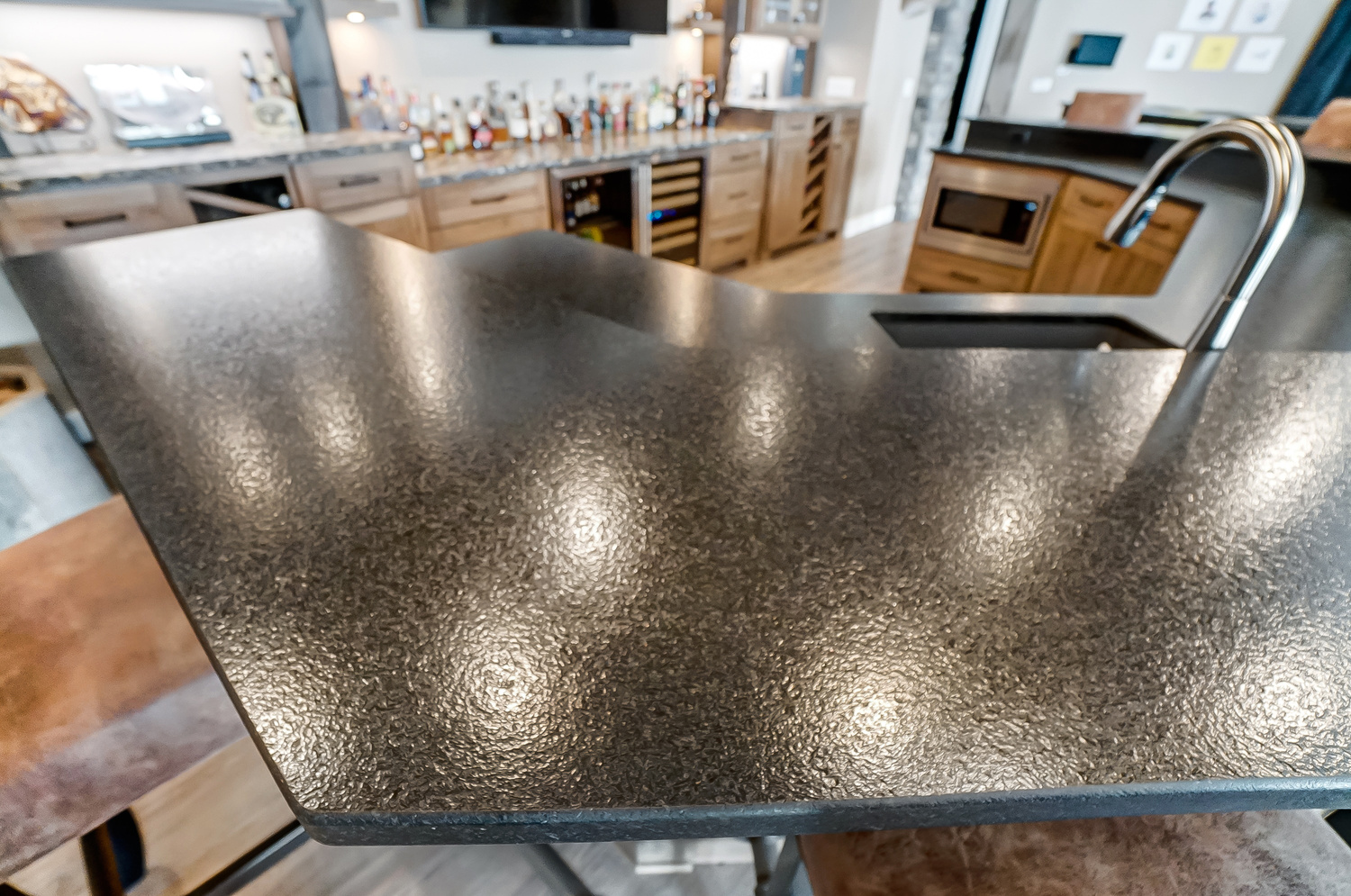
Soapstone rarely makes it onto bathroom countertop lists, but it deserves more attention than it gets. Composed largely of talc, it’s naturally non-porous and chemically inert, so it resists staining and etching from skincare products and cleaners without ever needing to be sealed. It’s a softer stone than the others here, so it can pick up light surface scratches with hard impact — the upside is that those scratches sand out easily, which isn’t true of most other materials on this list. Over time it also develops a soft, matte patina that many homeowners love for a warm, understated look, particularly in a modern or industrial-style bathroom. For day-to-day bathroom use, it’s one of the lowest-maintenance natural stone options available.
Quartz vs. Granite Bathroom Countertop: Which Should You Choose?
If your bathroom sees heavy daily traffic and you’d rather not think about sealing schedules, quartz is the more practical pick. If you want the character of real stone and don’t mind a light annual maintenance routine, granite holds up beautifully in a bathroom setting and gives you a slab that’s genuinely one of a kind. Neither is objectively “better” — it comes down to how much natural variation you want versus how little maintenance you’re willing to do.
Matching the Material to Your Bathroom
Not every bathroom in your house has to use the same logic:
- Powder room: Lower traffic and infrequent use make this the best place to use a higher-maintenance material like marble if you love the look — the light sealing schedule is easy to keep up with when a room sees only occasional guests.
- Family bathroom: Heavy daily use from multiple people points toward quartz, granite, or soapstone — all of which handle moisture and product exposure with minimal fuss, so you’re not touching up sealant or worrying about etching every few months.
- Primary suite: Often a middle ground — you can lean into a more luxurious material like quartzite or marble since the space typically sees more careful, adult use and fewer rushed mornings.
Pairing Your Countertop with Vanity Cabinetry and Finishes
Your countertop choice also shapes how the rest of the vanity comes together. A lighter stone like quartz or a pale quartzite pairs well with darker or more saturated cabinetry, while a bold, dark soapstone or granite can anchor a space with lighter wood tones. If you’re planning cabinet updates alongside your countertop, deciding on both together make coordinating storage layouts and finishes with your bathroom and laundry room cabinets far easier than choosing them separately. Countertop thickness and edge profiles are worth settling early too, since they shape both the look and feel of the finished top just as much as the stone itself.
Can You Use the Same Countertop Material in Your Bathroom as Your Kitchen?
Yes, in most cases — the same stone that performs well in your kitchen will generally perform just as well in your bathroom. The difference isn’t the material itself, it’s the exposure: kitchens deal with more heat and food acids, while bathrooms deal with more standing moisture and personal-care product residue. Homeowners designing a low-maintenance kitchen often land on the same materials — quartz, granite, or soapstone — that show up again and again on this list, and the maintenance guidance carries over directly to a bathroom application.
Ready to compare these materials in person? Visit our Findlay showroom to see quartz, granite, marble, quartzite, and soapstone slabs side by side.