Search “how often to seal granite countertops” and you’ll get answers ranging from six months to ten years — which isn’t actually helpful if you’re standing in your kitchen trying to figure out what your own countertop needs. The truth is that sealing schedules for granite countertops, quartzite, and soapstone aren’t the same, and none of them follow a single fixed calendar. What actually determines when a stone surface needs attention is the stone itself, how it’s used, and one simple test almost nobody talks about clearly.
How to Tell If Your Countertop Actually Needs Sealing
Instead of guessing based on a calendar, the most reliable way to know if a countertop needs sealing is the water test. Pour a few drops of water onto the surface, let it sit for 10 to 15 minutes, and watch what happens. If the water beads up and sits on top, the seal is still doing its job. If the water soaks in and darkens the stone, it’s time to reseal.
This test matters more than any generic schedule because granite and quartzite are natural materials — no two slabs are exactly alike, even from the same quarry. A darker, denser slab might go three or four years between sealings, while a lighter, more porous one might need attention every year. The water test tells you what’s actually happening with your specific countertop, not what a general rule of thumb assumes.
Granite Sealing Schedule: What the Water Test Really Tells You
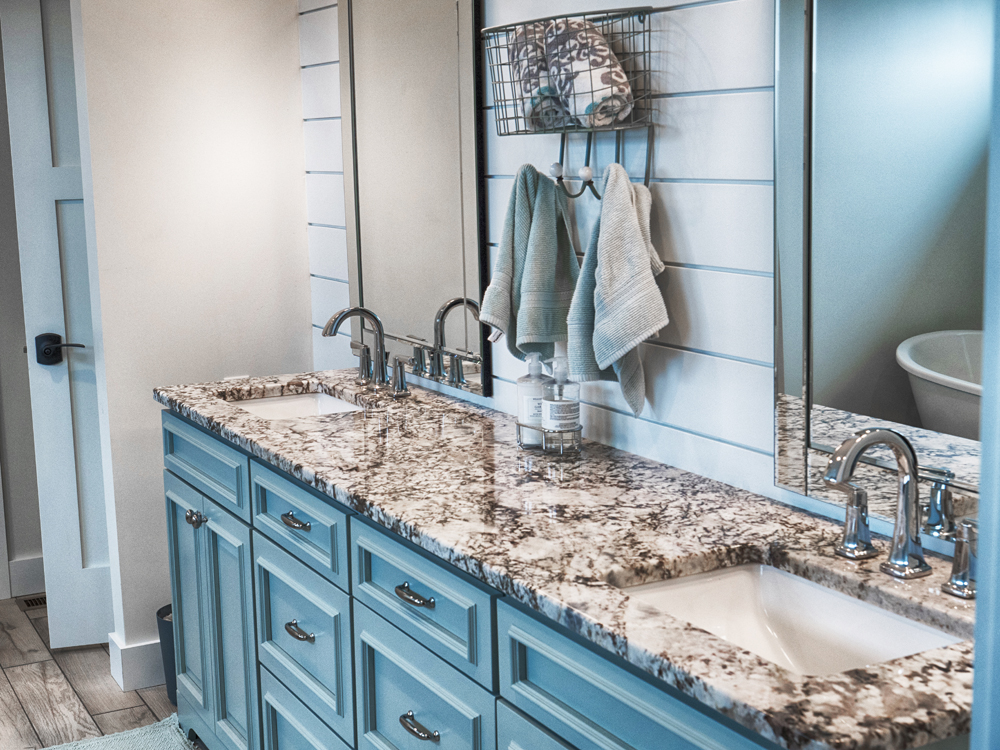
For most homes, granite countertops need resealing somewhere between once a year and once every three years — and the biggest factor isn’t the stone’s color, it’s where the countertop sits in your kitchen. Our granite durability breakdown covers how much wear granite can genuinely take, but sealing frequency comes down to daily use more than raw toughness.
The area around the sink and dishwasher takes the most water and detergent exposure, so it tends to wear through its seal faster than the rest of the countertop — sometimes needing a touch-up seal every six months even if the rest of the surface still passes the water test easily. A prep zone where you’re regularly cutting citrus, cooking with oil, or working with wine sees similar accelerated wear. A dry bar area or a rarely used stretch of counter, by contrast, might go the full three years without needing anything.
Signs your granite needs resealing sooner than expected: dull patches on an otherwise glossy surface, water spots that don’t wipe away easily, or any staining after a spill that’s cleaned up promptly. None of these mean the granite is damaged — they just mean the protective layer has worn thin and it’s time to reapply it.
Quartzite Sealing: More Variable Than You’d Think
Quartzite is one of the hardest natural stones used in countertops, but “hard” and “non-porous” aren’t the same thing, and this is where a lot of generic advice gets it wrong. Our piece on quartzite’s natural beauty and durability goes into what makes the stone so resilient, but sealing needs still vary quite a bit slab to slab.
Lighter quartzites tend to be more porous and can need resealing every year, while denser, darker varieties may go two to three years between applications. A good fabricator seals the cut edges of a quartzite slab during fabrication, before it’s ever installed, and then recommends the top surface be sealed again once the installation is finished. After that, the same water test used for granite applies here too — if water soaks in within a few minutes instead of beading, it’s time to reseal.
One quartzite-specific detail worth knowing: true quartzite resists acid etching far better than marble does, which is part of why it’s such a popular marble alternative. But that acid resistance doesn’t replace the need for sealing against staining — the two properties are separate, and it’s easy to assume one covers the other when it doesn’t.
Soapstone: Why It Doesn’t Need Sealing at All
Soapstone breaks the pattern entirely, and it’s worth understanding why. Unlike granite and quartzite, soapstone is naturally non-porous, which means there’s no sealer to apply or reapply in the first place. Sealing simply isn’t part of the maintenance conversation for this material.
What soapstone does get instead is mineral oil — not as protection, but to even out the stone’s color and speed along the natural darkening it develops over time. There’s no fixed schedule for oiling; most homeowners apply it whenever the countertop starts to look uneven or lighter than they’d like, wait about 15 minutes, then wipe off the excess. Skipping the oil entirely doesn’t damage the stone at all — it just means the countertop keeps its lighter, more matte original tone rather than developing the deep charcoal patina soapstone is known for.
Can You Over-Seal a Countertop?
Yes — applying sealer more often than a stone actually needs can leave a dull, hazy film that sits on top of the surface instead of absorbing into it. Because that film sits above the stone rather than inside its pores, it also scratches and shows wear more easily than the stone itself does.
This is exactly why the water test matters more than a blanket schedule: sealer that’s applied on top of an already-effective seal doesn’t add extra protection, it just builds up. If a countertop starts looking cloudy or feels slightly tacky after a fresh sealing, that’s usually a sign the sealer wasn’t fully wiped off before it cured, or that it didn’t need to be applied yet in the first place.
A Practical Maintenance Schedule You Can Actually Follow
Here’s how the three materials actually compare once you set aside the generic advice:
| Material | Needs Sealing? | How to Check | Typical Interval |
| Granite | Yes | Water test (10-15 min) | 1-3 years; sink/prep zones sooner |
| Quartzite | Yes, but varies by slab | Water test (10-15 min) | 1-3 years depending on porosity |
| Soapstone | No | Visual — even color, matte look | No schedule; oil as desired |
If you’re weighing these materials against each other for reasons beyond maintenance, our marble care guide covers the upkeep side of that fourth popular option, since marble’s care routine differs from all three of these in its own way.
Keeping Your Countertop Looking Its Best
The honest answer to “how often should I seal my countertop” is: it depends on the stone, where it sits in your kitchen, and what the water test actually tells you — not a number pulled from a generic maintenance calendar. Granite and quartzite both benefit from periodic resealing based on real signs of wear, while soapstone skips sealing altogether in favor of the occasional oil treatment.
If you’re not sure where your countertop stands, stop by our Findlay showroom or schedule a consultation — we’re happy to walk through the water test with you and point you toward the right care routine for your specific stone.